https://en.wikipedia.org/wiki/Nitaskinan
Nitaskinan is the ancestral homeland of the Atikamekw people. It is located in the valley of the Saint-Maurice River in Quebec, Canada. It covers an area of 80,000 km2.[1] On 8 September 2014, the Conseil de la Nation Atikamekw declared unilaterally the sovereignty of the Atikamekw Nation on the Nistaskinan.[2][3][4][5]
The objective of this is mainly to obtain a right of review for the
projects exploiting the natural resources and to highlight the
Atikamekw's identity. Nistaskinan means "our land" in the Atikamekw language. From a legal perspective, according to the Indian Act, the Atikamekw have self-administration on three Indian reserves, Manawan, Obedjiwan and Wemotaci, but the Nitaskinan covers an area much wider.
Showing posts with label Territoire. Show all posts
Showing posts with label Territoire. Show all posts
Ancestral rights decision inspires Atikamekw declaration of sovereignty
CBC, 10 septembre 2014
Atikamekw Nation issue declaration of sovereignty over 80,000 square kilometres of land in Quebec


Première Nation des Atikamekw d'Opitciwan c. Sa Majesté la Reine du chef du Canada
La
revendicatrice allègue ne pas avoir reçu la superficie à laquelle elle
avait droit et réclame des dommages et inconvénients en raison de ce
fait.
Plus spécifiquement, la revendicatrice soutient que la Couronne fédérale a violé ou n’a pas exécuté ses obligations légales et de fiduciaire en n’utilisant pas la formule habituelle de 60 acres par famille plus une provision de 10% pour les terres vacantes pour déterminer la contenance de la réserve d’Opitciwan, et en ne faisant aucun effort pour l’appliquer au moment de l’arpentage final, en 1943, alors qu’environ 75 familles atikamekw étaient regroupées à Opitciwan.
Plus spécifiquement, la revendicatrice soutient que la Couronne fédérale a violé ou n’a pas exécuté ses obligations légales et de fiduciaire en n’utilisant pas la formule habituelle de 60 acres par famille plus une provision de 10% pour les terres vacantes pour déterminer la contenance de la réserve d’Opitciwan, et en ne faisant aucun effort pour l’appliquer au moment de l’arpentage final, en 1943, alors qu’environ 75 familles atikamekw étaient regroupées à Opitciwan.
Première Nation des Atikamekw d'Opitciwan c. Sa Majesté la Reine du chef du Canada
Revendication SCT-2004-11
La revendication concerne l’inondation des terres de la réserve d’Opitciwan et du territoire environnant d’où les Atikamekw d’Opitciwan tiraient une partie de leurs moyens de subsistance à la suite de la mise en eau du réservoir Gouin en 1918 résultant de la construction du barrage La Loutre (aussi appelé le barrage Gouin) et les dommages et inconvénients subis par ceux-ci en raison de cet événement.
La revendication concerne l’inondation des terres de la réserve d’Opitciwan et du territoire environnant d’où les Atikamekw d’Opitciwan tiraient une partie de leurs moyens de subsistance à la suite de la mise en eau du réservoir Gouin en 1918 résultant de la construction du barrage La Loutre (aussi appelé le barrage Gouin) et les dommages et inconvénients subis par ceux-ci en raison de cet événement.


To Litigate or Negotiate: Atikamekw Nation is divided on how to approach land claim
APTN National News, 22 février 2019
“40 years! 40 years of negotiations that haven’t led to satisfactory social projects, so starting today, we will cease all territory negotiations and we will commence with a demand for title,” said Christian Awashish, before entering the courthouse and kicking off a lawsuit in Quebec superior court demanding recognition of their ancestral land.
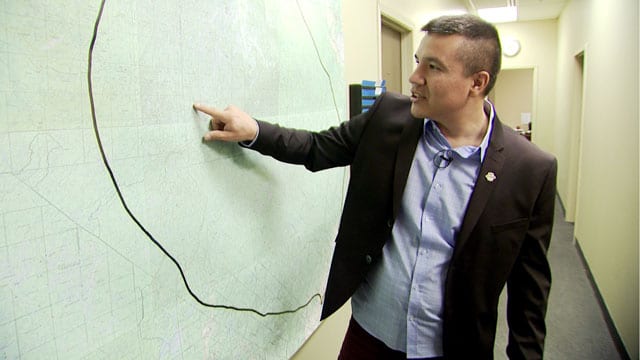
“40 years! 40 years of negotiations that haven’t led to satisfactory social projects, so starting today, we will cease all territory negotiations and we will commence with a demand for title,” said Christian Awashish, before entering the courthouse and kicking off a lawsuit in Quebec superior court demanding recognition of their ancestral land.

AKI - Sociétés et territoires autochtones
EduTIC Université du Québec à Trois-Rivières
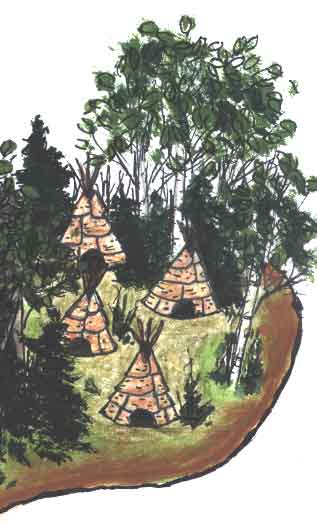
AKI décrit chaque société en dix thèmes : l’élève peut ainsi lire l’organisation d’une société sur son territoire. Ouvre l'élève à la diversité culturelle des sociétés et de leur territoire.
Les sociétés algonquiennes étaient réparties sur le continent américain depuis l'île de Terre-Neuve jusqu'aux Rocheuses. Parmi les Algonquiens, on retrouvait les Abénakis, les Algonquins, les Atikamekw, les Béothuks (aujourd’hui disparus), les Cris, les Malécites, les Micmacs, les Innus (Montagnais) et les Naskapis.
AKI décrit chaque société en dix thèmes : l’élève peut ainsi lire l’organisation d’une société sur son territoire. Ouvre l'élève à la diversité culturelle des sociétés et de leur territoire.
Les sociétés algonquiennes étaient réparties sur le continent américain depuis l'île de Terre-Neuve jusqu'aux Rocheuses. Parmi les Algonquiens, on retrouvait les Abénakis, les Algonquins, les Atikamekw, les Béothuks (aujourd’hui disparus), les Cris, les Malécites, les Micmacs, les Innus (Montagnais) et les Naskapis.


Judge issues injunction to stop logging on Atikamekw territory, montreal gazette - August 23, 2017
judge-issues-injunction-to-stop-logging-on-atikamekw-territory
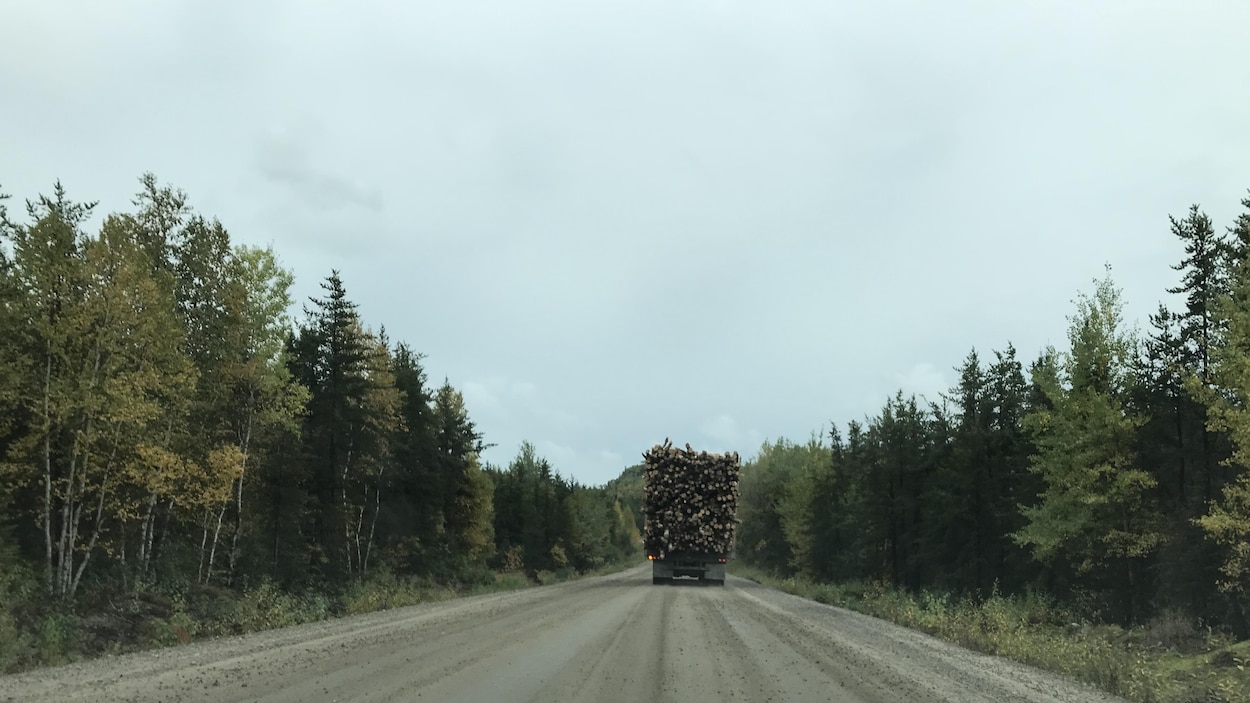
A Superior Court judge has ruled Groupe Rémabec must temporarily cease operation in the territory of the Atikamekw of Opitciwan.
Groupe Rémabec was planning to cut down enough trees to yield 200,000 cubic metres of wood, which the Atikamekw community argues would threaten wildlife habitats and would limit residents’ ability to hunt for 40 to 50 years, at least.
IGNITE infrastructure association inc
www.igniteassociation.org
The IGNITE Program was created by our association membership to provide energy-efficient and sustainable infrastructure capabilities to government, First Nations, education and healthcare sectors. This membership program brings together all stakeholders in our communities for the sole purpose of creating “The New Way Forward”.
IGNITE OFFICIAL SPEAKS AT NATIONAL FIRST NATIONS FORUM ON HOUSING AND INFRASTRUCTURE, 31 octobre 2017
https://pathwaygroup.com/
The Atikamekw’s Fight to Protect Their Land and Way of Life

atikamekws-fight-protect-their-land-and-way-life
Natural Defense Research Council
Combined expertise of nearly 500 scientists, lawyers, & advocates with the power of more than two million activists to confront our planet's most pressing problems.
The Atikamekw of Obedjiwan receive significant support in fight to protect ancestral lands, 1 mars 2018
Habiter le Nord Québecois, Université Laval
Chaire de recherche sur le développement durable du nord: habiter-le-nord-quebecois-mobiliser-comprendre-imaginer
http://www.habiterlenordquebecois.org/
http://www.habiterlenordquebecois.org/
POUR UN AMÉNAGEMENT DURABLE ET CULTURELLEMENT APPROPRIÉ POUR LES INNUS DU NITASSINAN ET INUIT DU NUNAVIK
Le projet a pour sujet d’étude l’aménagement culturellement approprié et durable de l’habitat des communautés innues du Nitassinan et inuit du Nunavik, qui font face à d’importants défis en ce qui concerne leurs milieux de vie.
Il aborde l’habitat autochtone nordique dans toute sa complexité en examinant les trois dimensions qui le structurent, qui lui donnent un sens et qui en orientent le développement, soit les communautés, les cadres de vie et la gouvernance.
Il repose sur l’hypothèse qu’une stratégie collaborative entre des détenteurs de différentes formes de savoir permet d’ouvrir les perspectives sur la façon de poser le problème (comprendre/intégrer), sur la variété des solutions qui peuvent y être apportées (imaginer/concevoir) et sur l’apprentissage et le changement dans les pratiques (mobiliser/valoriser).
Subscribe to:
Posts (Atom)